
The idea behind the standard
Trust works better with something clear to point to.
A creator, an audience, and an honest account of the work between them.
The question is simple. The answer should be clear.
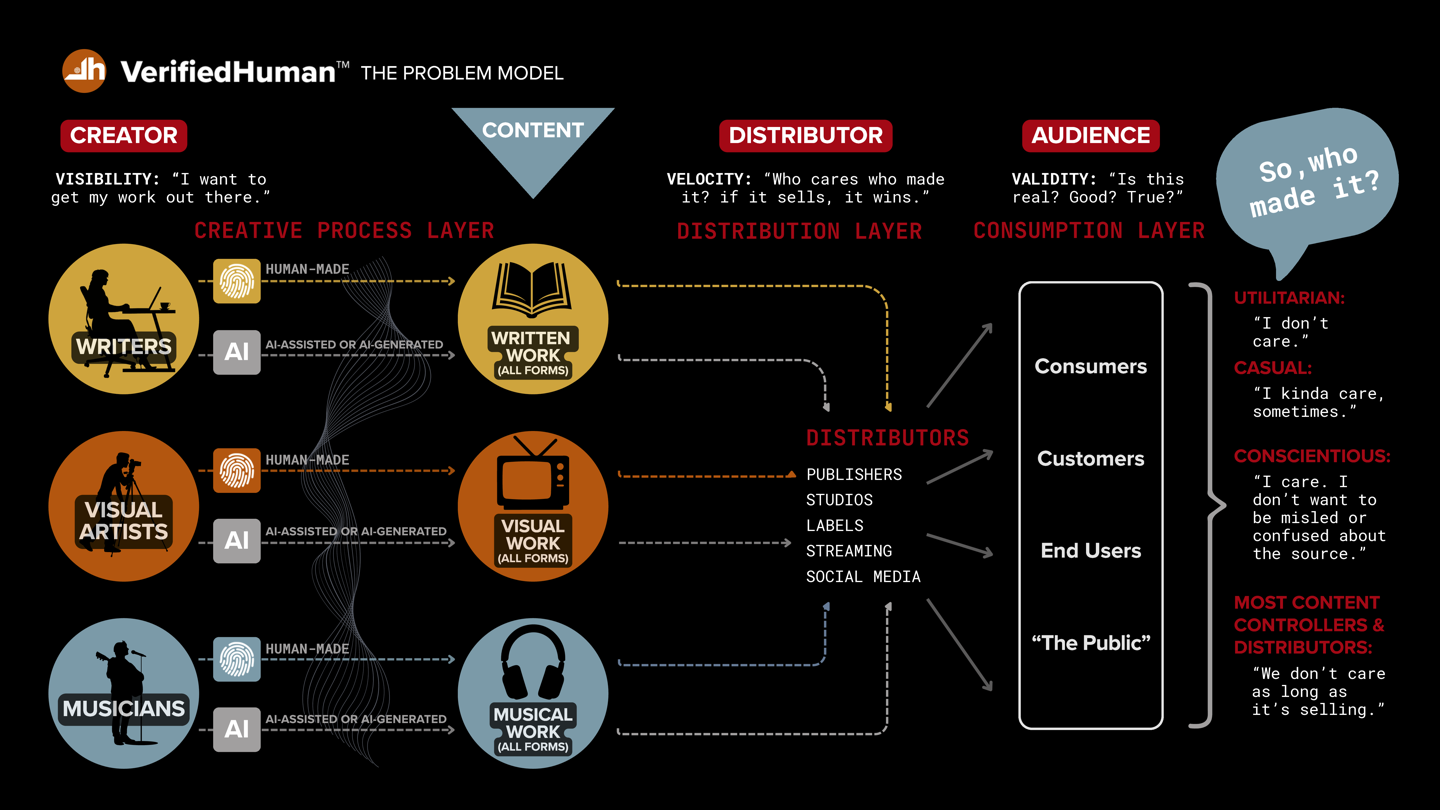
An audience encounters a piece of work. Who made it? What came from a person? What came from a system? Without an understandable account, people are left to guess.
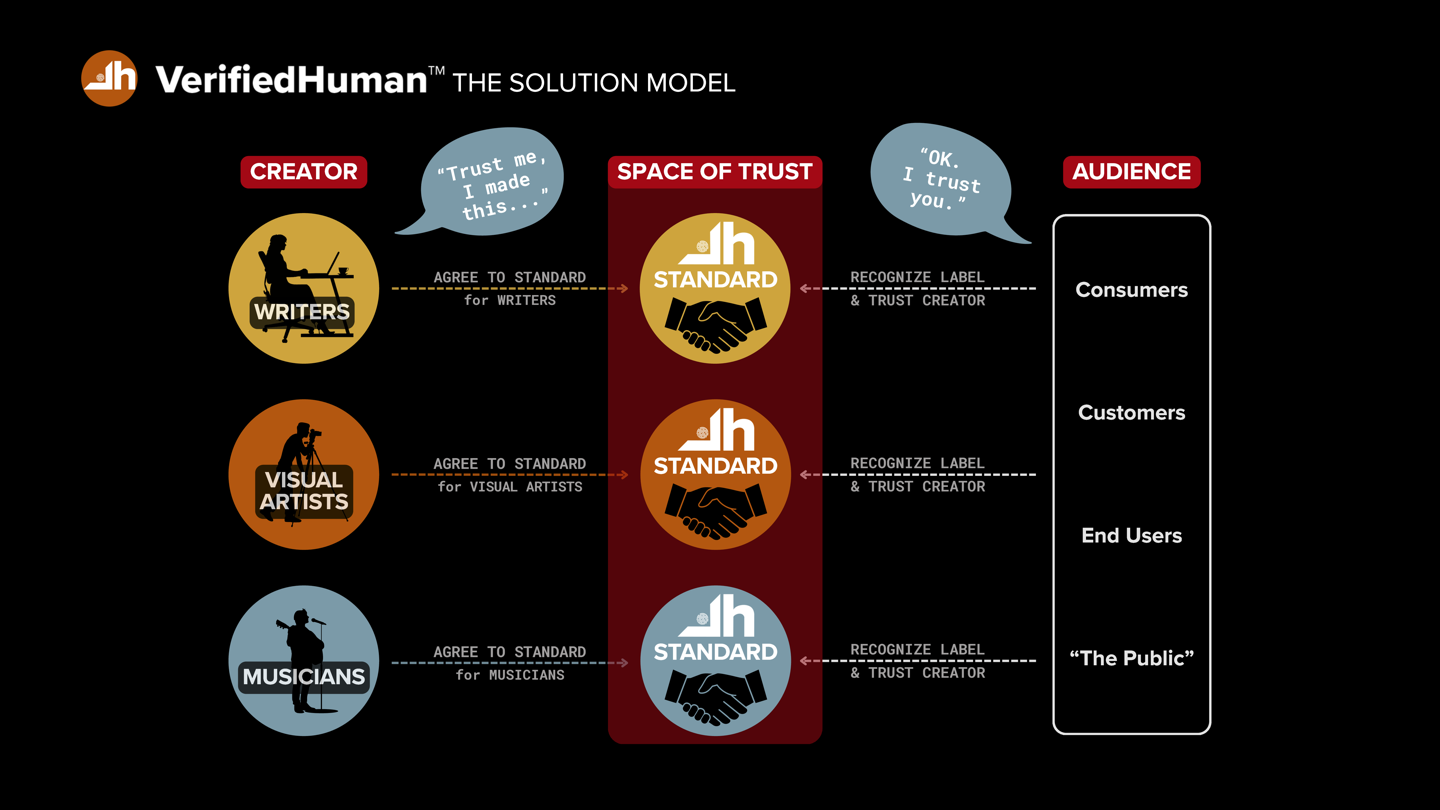
VerifiedHuman creates a shared point of reference. A creator makes a commitment, the work carries a meaningful label, and the audience can understand what is being claimed.
A space of trust.
- 01
The creator
Makes the essential human contribution and commits to the field’s standard.
- 02
The work
Carries the mark when it qualifies, with a clear account of material assistance.
- 03
The audience
Understands the commitment and can choose whether that difference matters.
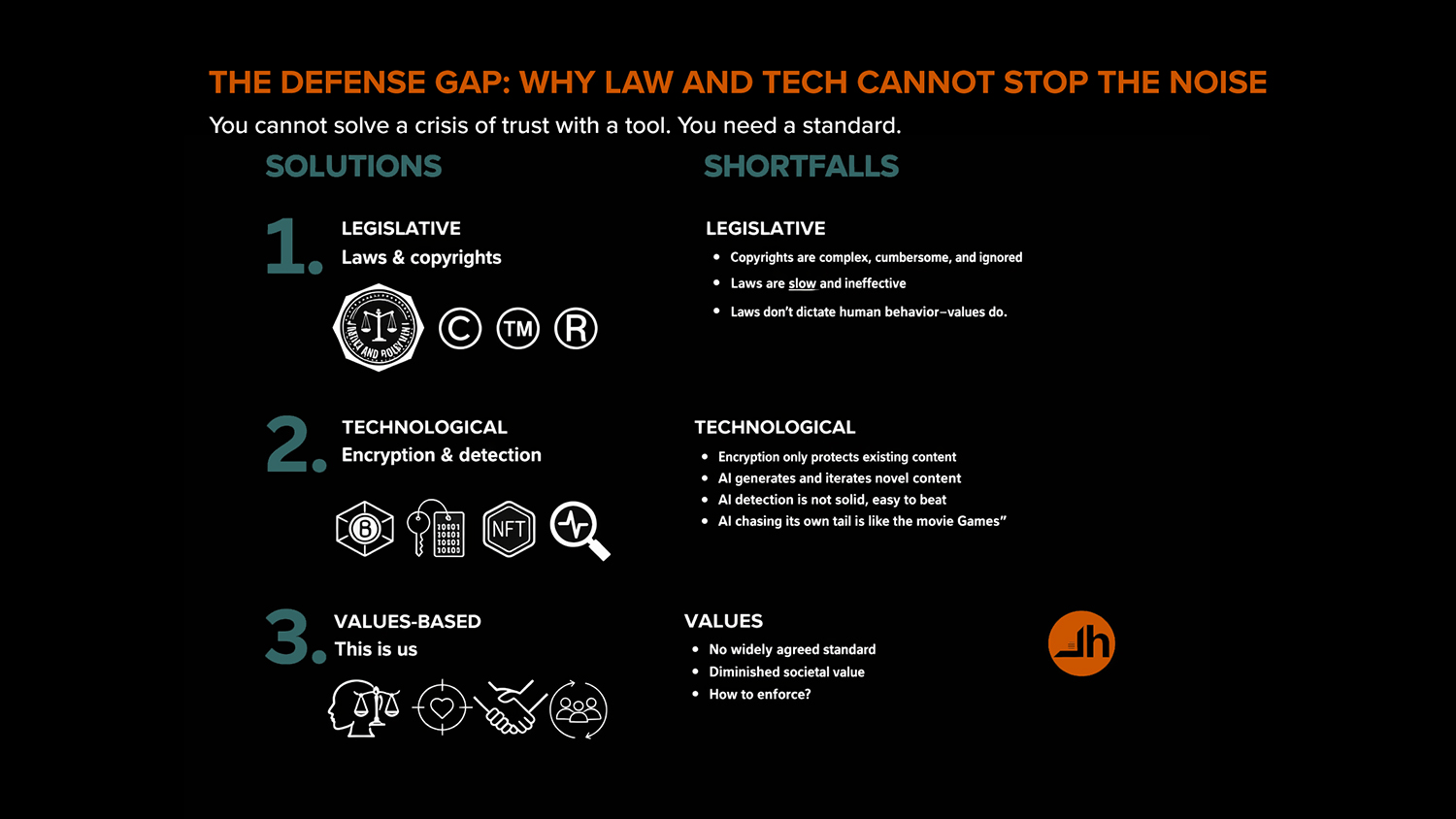
Different approaches have different jobs.
Law addresses rights and remedies. Provenance records information about a file’s history. Detection estimates whether content may have been generated. VerifiedHuman provides a standard and a creator’s commitment to it.
These approaches can coexist. Our role is to make human creativity recognizable and choosable, with a claim that a person is responsible for making honestly.
Accountability begins with a real explanation.
The mark invites a creator to stand behind their process. If a concern arises, the standard gives everyone something concrete to discuss. It is not a promise that every labeled file has already been audited or technically examined.
In Micah’s words.
Short videos from the development of VerifiedHuman. They explain the founding ideas; current requirements live in the field standards.
Early concept diagrams
A record of how the model developed.
These diagrams record the early development of the model. Some describe proposals for verification or enforcement. They are historical illustrations; the current field standards and membership terms define the present commitment.
Make your commitment.
Read the standard for your field, then put your name behind it.
Choose your standard