
Summer 2022
“Dad, try it.”
My son Ethan, a computer science major headed toward AI development, showed me Midjourney and Stable Diffusion.
“Dad, these can create totally novel pictures using whatever words you give them. Try it!”
I was in the middle of a home-improvement project. I gave him a prompt:
“Tell it to draw a half-Asian guy installing a vent fan in a small bathroom, angry.”
Me.
The tools produced stylized graphics, impressionistic renderings, and photorealistic versions of the situation I was in. These images hadn’t existed thirty seconds earlier. Some were unremarkable. Others were staggeringly good.
That’s crazy, son. I feel bad for portrait artists.
November 2022 – February 2023
Then it could write.
In November, Ethan showed me ChatGPT. We asked it for essays, poems, and whatever else occurred to us. The results were enough to make me stop and think about students, teachers, and what writing was going to mean.
Over the following months, AI seemed to be in every conversation. The possibilities were exciting. The implications were harder to take in. I kept wondering what would happen to people whose work had taken a lifetime to learn.
March 2023
The questions became harder to ignore.
In March, an open letter called for a six-month pause on training AI systems more powerful than GPT-4. Among its signatories were Elon Musk and Steve Wozniak. When people who had helped build the technological world were asking for time to think, I paid attention.
A newsletter from portrait photographer Jeremy Cowart also stayed with me. He described how difficult it had become to distinguish some AI-generated portraits from real photographs. If someone with that much experience could be unsure, what would the rest of us do?
That month, Levi Strauss announced a test of AI-generated clothing models. The company later clarified that the experiment would not replace its plans for live models and photo shoots, or serve as a substitute for its diversity commitments.
What interested me was the human question underneath it. A technically convincing image doesn’t settle everything people care about. There is a relationship between the thing we see and the person we believe is there.
April 2023
Brian, two wedge salads, and an idea.
My friend Brian Conn and I went to lunch. Over a couple of delicious wedge salads, we talked through what we had been watching.
By the end of lunch, we had arrived at a thought:
A day is coming when the default assumption will be, “I am going to assume AI made this unless you can prove otherwise.”
That would change things for anyone who makes human work. The writing might still be good. The music might still move someone. But the audience could no longer take its human origin for granted.
A creator would need a way to make that origin visible. And the people who cared would need a way to find it.
April 2023
Start with a human commitment.
I thought about legislation. I thought about detection tools, watermarks, and other ways of identifying what AI had made. None of those questions was simple, and none removed the need for a person to stand behind their own work.
I kept coming back to something more basic: people care about honesty. Most of us want to make things, tell the truth about them, and be treated fairly. The human ethical spirit is still here. We can build on it.
I invited twenty-five friends, and friends of friends, to help think this through. They brought different kinds of experience and different levels of involvement. Together, we began working toward a standard that people could understand and willingly adopt.
It needed to make sense to a nine-year-old poet in Minnesota as well as a Harvard-educated solid-state physicist. The central idea should be simple enough to say plainly: I made this, and I am willing to stand behind how it was made.
VerifiedHuman began in April 2023. The standard would make the commitment clear. The definitions would help people apply it to the real choices in their work.
May 2023 – 2024
The details mattered.
As we worked, the distinction between AI-assisted and AI-created became essential. Tools can support a person’s work. They can also take over the very part of the work that makes the authorship human. We needed language that respected the difference.
Education made the stakes especially clear. A teacher brings experience, judgment, and a relationship with students. A student needs the chance to develop those capacities. We wanted a framework that could help both of them talk honestly about the work.
Organizations raised another set of questions. Where could automation help? What responsibilities did a company have to the people whose labor and creativity made its work valuable? What should it mean to put a human-made label on something it published?
These questions became standards and definitions for different fields, with a shared concern at their center: the human contribution should remain meaningful and recognizable.
Some questions were still open.
Our early notes explored school subscriptions, independent audits, enforcement, and ways to sustain the organization. Those were possibilities under consideration, not a list of services already in place.
The practical questions remain worth taking seriously. A label has to mean something, and the commitment behind it has to be more than a slogan.
Continuing the work
The story is still being written.
What began with a few conversations has become a community of writers, artists, musicians, voice actors, content creators, educators, organizations, and advocates.
The thinking also found its way into my book, Human Is the New Vinyl: an exploration of why human origins can matter more as synthetic alternatives become easier to produce.
Today, the standards and the Human–AI Spectrum give people a more precise way to describe their work. Membership is free, with an invitation to contribute what they can. Our participation in C2PA connects that human commitment with the wider conversation about content provenance.
The tools will keep changing. So will the questions. I want us to keep paying attention to the individual artist, the student finding a voice, the person whose years of practice are present in what they make.
That person matters. Their work matters. We want to help it be found.
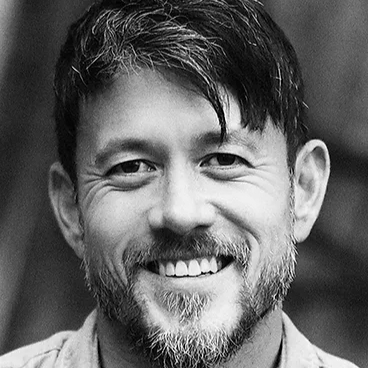
Micah VoraritskulFounder, VerifiedHuman
See where the idea has led.
About VerifiedHuman
Read the current standards
Meet the Collective